

drifting through june
travelling in scotland with my mom, monthly bookmarks, and things worth sharing


June was very much occupied by my trip around Scotland. Between the organisation before, travelling and getting back into a routine after, or at least trying to, I’m slowly regaining my footing.
Since my move to Edinburgh in September 2022, my mom has been pestering me to go on a trip together around Scotland. While I wasn’t against it, and knew how beautiful this country is, my priorities were elsewhere.
We are close and have made it a habit to go on a city trip together every year. In 2024, we went to Copenhagen. In 2025, Stockholm. I had envisioned Oslo for 2026 to continue with our Scandi adventures. Well, she had other plans.
Last November, my friend Mathilde made a pit stop in Edinburgh during her solo trip to Scotland. Mom got wind of it, and what she mostly remembered was that my friend travelled by public transport, mainly trains. Seeing my friend doing it, the idea started to bubble in her mind, and mine too.
Since my move from London to Edinburgh by car, my mom has sworn she would never drive in the UK again (fair enough, I do not drive myself). Surely we could replicate my friend’s itinerary. That was the original plan back in December when I put our Scandinavian adventures on pause. Six months later, I can tell you that our itineraries couldn’t be more different.
What travelling around Scotland for two weeks with my mom taught me…
Patience
When I asked her what she wanted to do in Scotland, if there was anything on her mind or bucket list, she happily stated: visit castles, pet Highland cows, and see Nessie. Trusting me to build a full itinerary around those three points. I had total freedom. Which turned out to be a curse in disguise.
I had to build everything from the ground up. The back and forth between us was stressful at times, and I started to regret saying yes. My mom is used to travel agencies where everything is taken care of. The itinerary is set in stone, nothing changes. This time around, as I was organising everything, things were different. Asking her to make decisions, or simply pick between a few accommodation options, tested my patience more than once. I may have lost a few nights’ sleep in the process, but a month before her arrival, the itinerary was finalised.
She was also patient with me when I’d stop and take random pictures of all the trees I saw or little details here and there.
I’m the adult now
Past your thirties, you suddenly become the adult in the parent-child relationship. My mom is from the baby boomer generation and has become an iPad kid, takes pictures of her food before eating, and continuously asks me for Instagram advice. It’s quite funny. Now that she is retired, she can finally put all boring adult stuff aside and be a child again. She would ask me when we’d arrive, if it was far, and if it would take long. Sometimes even complains that she is bored.
The person who once organised everything, who had snacks and water in her bag, now lets me organise things for her. I’m the one checking train platforms, planning routes, carrying heavier bags, and making sure there was somewhere to sit. Those are tiny moments where I realise life has quietly shifted. Seeing her, all giddy, feeding the Highland cows was probably my favourite memory of the trip.
She is and will always be a mom
My mom is frugal in her everyday life, and I envy her frugality. But on holiday, it’s like money has no value. She’ll gladly pay for everything and anything. Letting me contribute with little things like paying for our ice creams or coffees became a running debate. Some things never change. No matter how old I get, she’ll always want to look after me.
Adjusting expectations
As mentioned earlier, the bucket list she provided was rather sparse. She is also a city girl. Don’t get me wrong, I’m too. But deep down there’s still a little Scout Girl who doesn’t mind getting dirty, walking miles through forests, or hiking a mountain (at my own pace) to reach beautiful scenery.
My bucket list was more about those things. But at 73, turning 74 at the end of the year, hiking isn’t part of her vocabulary. So there are a few things we had to cross from my list or tweak - like getting on the funicular instead of climbing to the mountain’s peak.
Adapting rhythm
Travelling with someone in their seventies means slowing down, not because you choose to, but because you have to. We started the day early and ended the day early, exhausted from all the walking. Going somewhere, especially when we were in Edinburgh, which is rather hilly, meant we had to leave fifteen minutes earlier than I would usually do.
I started noticing benches. Suggesting we stop more often because she didn’t dare ask. Accepting that some days only have one thing planned. I dropped her off at a picnic table and hiked Cairngorm Mountain a little higher. I dropped her off at a cafe to explore a gallery or a bookshop by myself because she isn’t into those things. It was all about compromises.
Being realistic
When I told my friends that I was taking this trip in Scotland, they all pitched in, recommending places, cities, and islands to go to. And while I would have loved doing it all, I also needed to be realistic. We went to the northeast side of Scotland, so doing things in the west didn’t match our itinerary. We only had two weeks. There are things we couldn’t do physically, not just her, but me too. I’m not as outdoorsy as I’d love to be. We also wanted to spend time together, enjoy it all at our own pace, allow for pauses here and there, and not cram a long list of things and places into two weeks.
There will always be some bickering
We cannot avoid it. We are a family. And mine always shows love through teasing. Deep breaths (from both sides) were necessary. You’ve got to tell yourself that it’s not that deep and instead look at the view.
In the end, I’m glad we ticked off most of my mom’s wishlist despite going to Loch Ness and not seeing Nessie (she doesn’t seem to be holding it against me, phew!). We even managed to do a few things on my list, too. We have different lifestyles, travel styles, diets, physical capacities, and priorities. That’s probably why I always postponed that trip with her. I knew I wouldn’t be able to do and see all the things I wanted. I had fomo before starting. But in hindsight, now that the trip is behind us, I think the major fomo would’ve been missing the chance to do it with her. When you travel alone, memories belong only to you. Travelling together meant creating a shared archive. I can tell her, “Remember how big the Highland cows’ tongues were?”
This trip showed me that travelling in Scotland without a car was possible. And I’m glad she pushed me to do it, otherwise I would’ve postponed it again and again. Now I know that my next Scottish adventure is just a train away.
Each month, I like to take a moment to reflect and share a few favourites from the weeks gone by. This June, Scotland took up so much space that it naturally shaped this month’s letter too. I’ve switched a few things around and will be back to the usual format next month.
Below, I’ve rounded up my picks in the following categories:
Media Stack – Digital detours that held my attention
Music Interlude – Songs I kept listening to
Bookmarks – Books I flipped through
MEDIA STACK
My wonderful friend and colleague, Jianing, put together a staff queer film night in honour of Pride. We watched eight independent short films weaving together stories of women reclaiming spaces shaped by patriarchy, queer self-discovery, home and displacement, and queer love. I will not review all the films, but I still want to share the list as I found her curation incredibly thoughtful and carefully sequenced, with each film echoing the next.
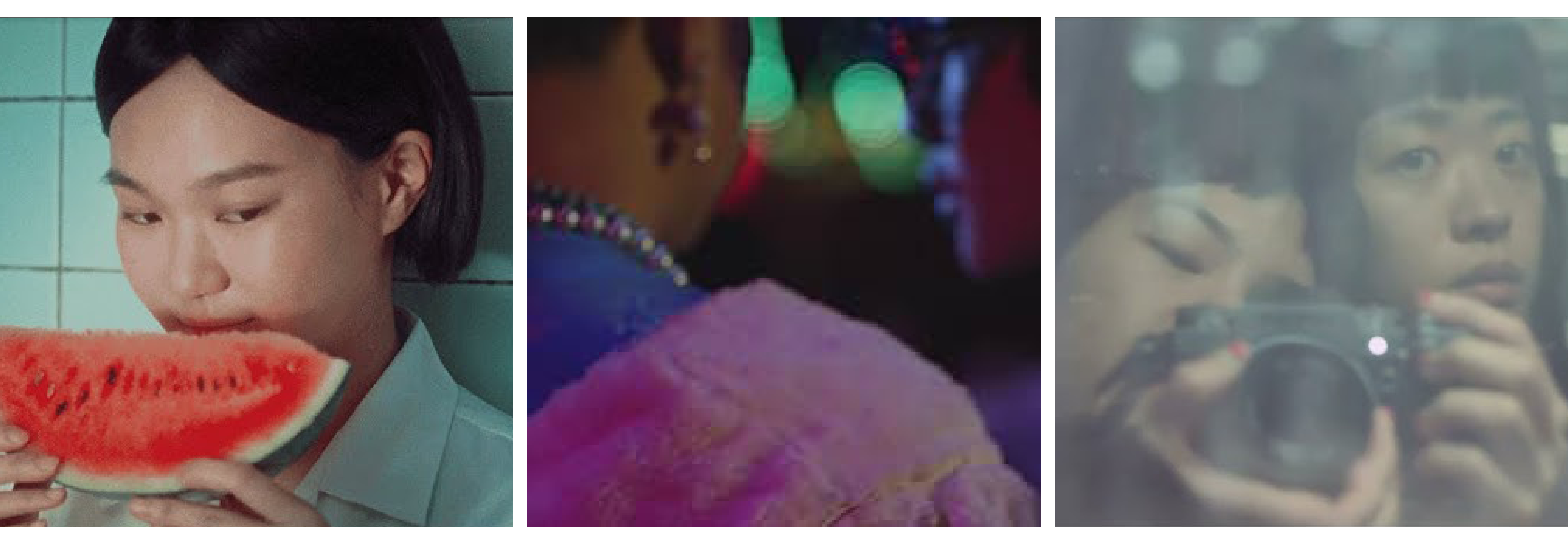
Tides That Tie: In Cinema, We Connect!
The night started with Meshes of the Afternoon (dir. Maya Deren, 1943 US), A Brighter Summer Day for The Lady Avengers (dir. Birdy Weiting Hung, 2024 Taiwan US), and DYKETACTICS (dir. Barbara Hammer, 1974 US).
I think those were my favourites because they spoke to each other.
In Meshes of the Afternoon, a woman enters a looping, dreamlike nightmare she cannot escape. It’s experimental, focusing on the fractured experience of self under patriarchy. In direct response, A Brighter Summer Day for The Lady Avengers explores the sexual awakening of a teenage girl and culminates in an act of female revenge. I particularly loved how sensory this film was, the watermelon juice bag, the way it bleeds into desire and daydream. It felt like a reclamation of pleasure, femininity and agency within a patriarchal frame. And DYKETACTICS was pure release, lesbians dancing, laughing, existing freely with no male gaze in sight.
We then watched Blooming Night (dir. Bell Zhong, 2017 China) and DIHYA (dir. Lucia Martinez Garcia, 2021 Switzerland). These two were about gender fluidity and transformation, and explored how you can find yourself on the dance floor.
The last three, My Therapist Said, I Am Full of Sadness (dir. Monica Tedja, 2024 Germany Indonesia), Dear To Me (dir. Monica Tedja, 2021 Germany Indonesia), and Aliens in Beirut (dir. Raghed Charabaty, 2025 Canada), moved into queer diaspora and belonging. What do you do when love and family no longer hold space for who you are? And how distance sometimes becomes survival.
Given that these are all short films under 22 minutes, I didn’t go into too much plot detail. I would rather leave them here as a list for you to discover. It was such a special evening and the best way to close Pride Month <3
Travelling in June meant I read a little less than usual. I carried two short books with me, but in between moments, I found myself heading over to Substack. Let me know if any of these pieces resonate with you, too.
What are we actually looking for online?
In this essay, Teresa argues that most of us rarely find what we’re seeking after hours of scrolling. Instead, social media keeps us hooked while leaving us mentally exhausted and disconnected from ourselves. She doesn’t advocate abandoning technology altogether, but becoming more conscious of how and why we use it.
I saw her article as an invitation to reflect on this question: what am I actually looking for online? The words that came to mind were creativity, inspiration, connection, community, and let’s be honest, validation too. Technology itself isn’t the problem. The way we use it is. Sometimes intentionally, sometimes out of habit, and often out of boredom. However, boredom has its own value. It’s where inspiration often hides. I don’t want to spend hours endlessly scrolling. I want to spend more time offline doing the things I love, taking pictures, writing, and then sharing them online if I feel like it.
Performance Isn’t the Problem
Subha’s essay reflects on the difference between performing online as a form of expression versus performing a fabricated version of oneself for validation or success. I love how this one sits in conversation with the previous article.
The internet has sparked endless debates about reading, online or offline, and whether that too is performative. Everyone is suddenly labelled a “performative reader” if they are seen outside with a book, especially a classic novel with a matcha latte in hand.
It makes you wonder, are we all performing all the time? And the honest answer is yes, but maybe more as expression rather than performance for approval. Performance is unavoidable online, we share highlights, not wholes. The real issue isn’t performing itself, but performing a version of ourselves that feels false or unsustainable. While external validation is part of why I share online, the numbers don’t carry much weight. One like, one comment, if the work feels aligned, that is already enough.
traveling feels like entering a new reality
Travel feels like entering another version of life because it removes you from routine and immerses you in constant novelty. As I was travelling this month, I really resonated with this piece. But more than entering another reality, travelling makes me feel like I’m returning to myself.
Do you ever get that feeling?
The internet is getting smaller again
This article explores how the internet, despite growing massively in size and content volume, can feel like it’s getting smaller in a more meaningful way.
One line that stayed with me was: “The creators I return to each week aren’t the ones making the most noise. They’re actually the people I escape to when I need a break from it all. Their work makes the internet feel a little smaller, calmer and more human.”
It made me think of one of Ross’ recent vlogs, where he reflects on creators (like himself) being criticised for making “boring” videos, quiet, slow, no more than pretty b-roll. In a loud world, I gravitate toward quieter corners, online creators who help me notice more, make me feel safe and appreciate the little things, and also offline spaces like parks, cafés and galleries where nothing is being demanded of me.
So I completely agree with Hannah. The most valuable creators are not the loudest. They are the ones who help you think more clearly and make sense of an overwhelming world.
But Have You Really Been There?
Eilin might be one of my favourite travel writers on Substack. She blends place and reflection in a way that always makes me slow down as I read and ponder on my own journey.
In this piece, she reflects on her short trip to Ticino, Switzerland, its rivers, stone villages and quiet landscapes, and on how travel is increasingly shaped by social media. Living in Edinburgh, where tourism has literally exploded, I often recognise that impulse I see in tourists. They arrive, capture, and leave.
What stayed with me most is her invitation to resist that rhythm and instead inhabit places fully, with attention rather than urgency, presence rather than treating a place like a checklist. I loved this piece!
The Art of Healing
This letter arrived at the right time, as I have recently found myself thinking about a relationship that ended nine years ago. I kept wondering why those thoughts had suddenly resurfaced. Hadn’t I already healed from it?
Hasif and Ferida’s words reminded me that healing isn’t a finish line we cross once and for all. It doesn’t mean old memories never return. It just means they no longer hold the same place inside us. That reframed something for me. Healing keeps happening every day, in ways we often don’t notice.
MUSIC INTERLUDE
One thing I love about the internet is falling down unexpected rabbit holes and stumbling across gems like this collaboration between GENER8ION and Swedish rapper Yung Lean.
I will leave you with the music video as well. It’s more like a short film with stunning cinematography. The video is set in a near-future dystopia in a British school where Yung Lean plays a familiar kind of chaotic student. The choreography is hypnotic and almost trance-like.
BOOKMARKS
Knowing that I would be travelling during June, I was drawn to shorter books this month. Bite-sized fiction carried me through a busy period before, during and after the trip. Most revolved around the everyday rather than the dramatic. Ordinary lives, memory, and a touch of magical realism.
Here’s a list of all the books I finished in June:
The Memory Bookshop by Song Yu-jeong (magical realism)
They by Helle Helle (literary)
My Year in Paris with Gertrude Stein by Deborah Levy (memoir/literary)
How Kyoto Breaks Your Heart by Florentyna Leow (memoir/essays)
How to Hold Someone in Your Heart by Mizuki Tsujimura (magical realism)
Last Words from Montmartre by Qiu Miaojin (literary)


The Memory Bookshop by Song Yu-jeong (tr. Shanna Tan)
Set in a small second-hand bookshop where forgotten memories can be recovered through books, this novel follows Jiwon, who is offered the chance to revisit three memories from her past, trading part of her future in exchange.
The book surprised me as it follows only one protagonist compared to other healing novels that are little vignettes sewn together in a book. I liked that aspect of the story, but my brain kept wondering what the next story would be. I loved how the magic system worked: if you go further into the past, you can only keep going further. So if you’re wise, you start close before going further back in time.
Given that the novel is centred on Jiwon and her life seven years after her mother’s death, it felt especially tender. Stories about mothers and daughters always stay with me. I enjoyed the first two-thirds most, though the final return to the past left me slightly unsure. Even a little icky. Still, it’s a thoughtful novel about grief, healing and love.
They by Helle Helle (tr. Martin Aitken)
They is a quiet coming-of-age story following a teenage girl growing up in provincial Denmark and her close bond with her mother. The story gradually shifts when the mother receives a terminal illness with only months to live. Helle Helle captures the emotional weight of ordinary moments with remarkable restraint, letting silence carry much of the narrative.
My Year in Paris with Gertrude Stein by Deborah Levy
Part memoir (or is it?), part reflection, Deborah Levy revisits her time in Paris while obsessing over Gertrude Stein. It’s always a joy to return to her writing. In this book, she moves between daily life, contemporary anxieties and historical reflection, weaving Stein, her relationship with Alice B. Toklas, and her own anxieties about the 19th and 20th centuries.
It’s a fascinating way of approaching biography, if it can even be called that, making it much more alive than the usual chronological order. The narrative is also threaded with female friendship, and I just love how Deborah Levy writes women characters.
How Kyoto Breaks Your Heart by Florentyna Leow
This autobiographical essay collection reflects on her life in Kyoto and how heartbreak isn’t always romantic. Sometimes it’s tied to a place, or to the person who anchored you in a foreign city, and returning physically or in thought always brings layered emotions.
Through food, neighbourhoods and everyday encounters, Leow explores belonging, nostalgia and identity. This one stayed with me as I think about travelling back to Toronto next year after many years away. My emotions are all over the place at the thought of it.
How to Hold Someone in Your Heart by Mizuki Tsujimura (tr. Yuki Tejima)
I read the first book in the Lost Souls duology, Lost Souls Meet Under a Full Moon, last January and enjoyed it, though something felt amiss that kept me from loving it. This second instalment takes place seven years later, as Ayumi continues to serve as a go-between, reuniting the living and the dead during a full moon.
It felt like a fitting conclusion. Alongside the episodic stories of people seeking closure, we also spend more time with Ayumi himself, following his reflections on everyday life, purpose and the future. And this is something I enjoyed and missed from the first book!
Last Words from Montmartre by Qiu Miaojin (tr. Ari Larissa Heinrich)
Written as a series of letters after a devastating breakup between two young women, this novel explores the impossibility of letting go and the need to make sense of oneself through writing. I was completely drawn into Qiu Miaojin’s voice. At times, I wasn’t sure whether I was reading Zoë, Yu, Qiu Miaojin, or myself.
I’m looking forward to reading Notes of a Crocodile, and can already predict it will be devastating. Apparently, this is how I enjoy my reads.
If June taught me anything, it’s that travelling isn’t always about seeing more. Sometimes it’s about seeing differently, welcoming unexpected pauses, and learning what it means to travel alongside someone else’s rhythm.
The same could probably be said for books too. The stories that stay with me aren’t always the loudest or the longest. They’re often the ones that shift the way I look at the world.
I’d love to know: what’s one moment from June you’ll still be thinking about a few months from now? And have you read anything recently that has lingered with you long after you turned the final page?
Until next time,
Amandine
If you enjoyed this article, you might also like:


thank you for reading ♡
you can find me on instagram for more, and if you enjoyed this, consider subscribing, sharing a stroll of thoughts, or supporting my writing here xx
What a lovely read! I can definitely relate to stepping into the travel planner role for parents. Would love to hear more about your tip around Scotland. I visited Edinburg for the first time this June, and I’m already looking forward to come back and explore more of the areas nearby ☺️
I loved how you described the feelings I have for my mom. Whenever I visit my parents, they are always on their phones, even when we are having a meal. It’s weird because they wouldn’t allow me to bring my phone to the table 15 years ago. While writing this, I felt like crying because sometimes I wish we never had to grow up and could have more time with them. Thank you for this genuine insight and for helping me realize all of this.